Oops, What Happened?
January 23rd, 2009You’re trying to access a page that no longer exists. You were probably sent here by an impolite linker. Sorry. Better luck next time.
Also, you should plant a tree, imagine if everyone in the world planted an apple tree? I highly recommend it.
But hey, if you’re looking for great gardening content, you’ve found it! Try maybe this article on front yard farming or this one on harvesting apples or even this one on growing a dinosaur garden! Lots of yummy content for you to eat here. Look around, won’t you?
Water Garden in Winter
December 23rd, 2008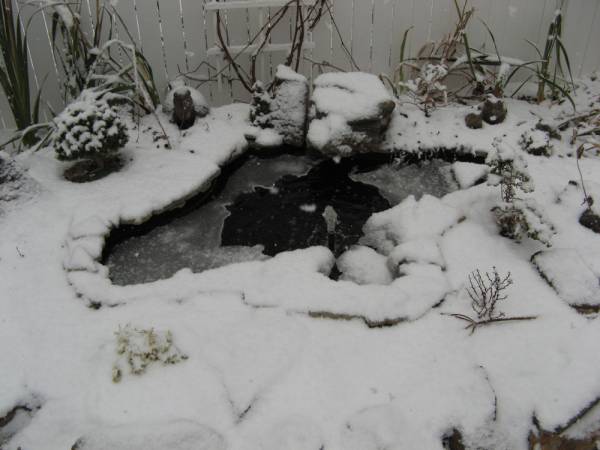 Behold! The water feature in winter! It lives!
To recap, this is my new water feature built last spring, want to learn more about it? Start here. This blog post though is about the winter.
What do you need to do with a water feature in winter? Well, what I did was first, I uninstalled the tubing from my bubbling rock. See, I bored a hole down a rock and put a tube attached to the water pump up the hole, the water then bubbles up the rock, coming out, and cascading down the rock into the pool. This would have turned into an ice machine in the winter, so I removed it.
Next, I removed the fancy bell fountain head, you want to keep your fountain going, but you want big water movement, so I removed the head entirely and didn’t replace it, so it is basically at maximum flow.
See, if you have fish, which I do, the most important thing is that the pond doesn’t freeze solid (I hope mine won’t, so far we’ve flirted with 0 and it hasn’t). The second most important thing is to keep water moving on the surface for a gas exchange process that allows the water to oxygenate, non-oxygenated water kills fish as much as freezing them solid would. You can buy heaters to keep a small area of your pond ice free, or do as I do and just keep the fountain on (moving water is far less apt to freeze). The fish enter a sort of suspended animation during this time and don’t need to be fed, but you gotta keep the water oxygenated.
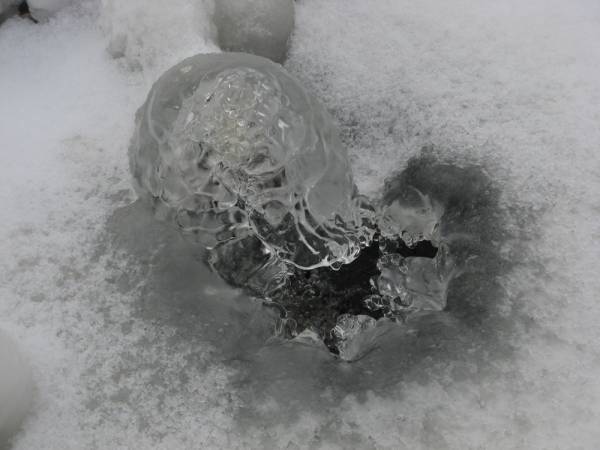
There was an amusing side effect to keeping my fountain on though, as you can see in the below picture at times it build itself a crystal cave where the fountain was entirely incased in ice, it was still moving inside the ice, but it was cold enough that eventually the water being spurted up froze to form a dome around the fountain.
Turning a Garden Bed Down for Winter
December 15th, 2008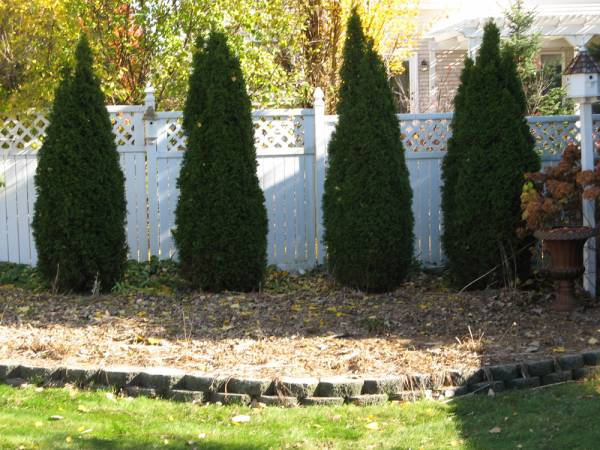 I’ve been a bad blogger. I’ve been procrastinating. At least a month ago, probably more like 6 weeks, I took some photos to build a blog post around, and then fall happened, and as well business stuff happened where a lot of my time was consumed, and the holidays happened, and well, this advice I’m going to give is somewhat less timely now, but still good.
Today I wish to discuss my back back bed. Yes, two backs, for back of the back yard. This bed has a structural background of four arborvitae (there when we bought the house) and is filled in all the rest (16 feet depth from the arborvitaes to the front probably) with lilies, and daylilies, and rudbeckias, and some sage, and just a whole bunch of different types of flowering perennials that get cut back every year.
Now, typically I cut them back with hand shears, but this year, I was busy, and so in the interest of saving time, I mowed. I mowed the bed down. All the woodier stuff took some work but I got it done. I didn’t bag, I let all the debris fall where it may, a new layer of mulch for the bed. This less-than-gentle approach doesn’t work if you’ve got mixed perennials with shrubs, or if you have labels that could get whacked (all other beds in my property have labels, being more specimen orientated, this bed though, is just a free for all prairie look, formal borders aside). It can also possibly damage plants if you’re using it on delicate plants, but I wasn’t, most of the stuff was dormant already anyways.
After I mowed I spread a full bag of blood meal (nitrogen) and a full bag of bone meal (phosphorus). Why fertilize now going into winter after I just mowed down everything in the bed? I’m glad you asked! Because, that is the point of this blog post. FERTILIZE NOW! All natural organic fertilizers like bone meal and blood meal take awhile to break down and fully release their nutrients in the soil, and the colder it is the longer that can take. By fertilizing now you’re timing it so the soil the will nice and fertile when your spring stuff starts emerging. If you plan to use these organic fertilizers then, there will be a delay before they become effective and you may not want that. When you’re using all natural fertilizers think a season in advance. Fertilize for Spring in Winter, for Summer in Spring, and for Fall in Summer.
If you’re using synthetic fertilizers, which are already typically in a form that plants can use, you don’t need to worry about this, they act quickly and you can wait until Spring to fertilize, but if you want to use natural stuff, use it now.
Consequently, I also shredded up a 32 gallon can of shredded leaves and spread those on top of the same bed after I put down the bone and blood meal. So it has a layer of mower clippings, the bone & blood meal, then a layer of shredded leaves. I figure the bed will either perform really good next year, or really bad. We’ll see. I also plan to plant a dwarf apricot tree right in the middle of it next year.
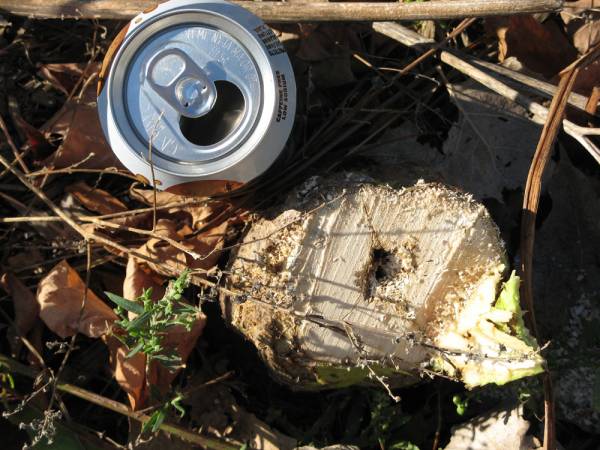
Now, in completely unrelated news. When tidying up my yard for Winter I of course had to cut down my massive sunflowers. Since I had blogged about them before I thought perhaps I’d include an update showing just how massive the trunks got (and yes, they’re trunks, not stems, not at this size). It is about 150% the width of a popcan, and this was growing in crappy soil between the sidewalk and the road.
Opossum on the Porch, Compost Eating Critter
November 20th, 2008No picture with this post, this is probably the first post I’ve done ever without a picture, for some reason I didn’t think about it last night.
So, last night I made some skillet apples, and as I do normally I got out a brown paper bag to put all the scraps into for taking out to one of my compost tumblers. I like this because the bag adds brown material the same time I’m adding the scraps (which are considered green) so it helps with the ratio.
It was late, and cold, and windy though, so I thought to myself “Hey, I’ll just put this bag outside on the back porch on the deck and run it to the composter tommorow.”
A few hours later my wife comes upstairs and says our cats are being well enterained by an opossum just out our (mostly glass, which is why the cats could see) back door. It was sitting there just a foot from our door and us, not a care in the world, eating the apple peels and cores.
So, not going to do that again, but you can look at it a couple ways, the opossum needed to eat too right? But do you really want a wild animal hanging around your small yard looking for food scraps? What if you have a family pet that goes outdoors, it could be bitten and have to be put down. The animal can also attack your food crops (if this was summer) or get into your garbage, or eat all your bird seed, or eat ornamentals even, plus, opossums are ugly.
It only took 3 hours maybe for the opossum to narrow in on that bag of stuff (and I’ve put bags out before without a problem, so it wasn’t as if this guy was already established in our yard).
This is why people who aren’t living out in the woods or on a farm or something anyways, people like us who live in a fairly densely populated area, should not run open compost piles. Imagine how many critters I’d have if I had an open compost pile? Raccooms, opossums, and yes, SKUNKS! Imagine that. Instead, I have 1 fully enclosed compost bin that is even on large concrete stepping stones so that nothing can burrow up into it, and 2 fully enclosed compost tumblers. Compost tumblers may be more expensive than freeform piles or large open bins, and they hold less in the end, but they work faster, and not having a bunch of nuisance critters living in your yard is a big plus. The last thing anyone wants is a skunk to take up residence under your deck because your composting kitchen scraps are readily accessible, after you pay $200 to have that skunk removed, a tumbler suddenly looks like a bargain.
And yes, I grew up in the country, in a house in the woods, and we had shotguns to deal with nuisance animals trying to live in our garage, under our deck, etc. Just for the heat and catfood. But, that too, is not an option here in town.
Endless Summer Hydrangea Diary
October 25th, 2008I love my Endless Summer Hydrangeas, I’ve blogged about them before (See related posts below) and I’ve got… about 10 of them I guess. I’ve also given them as gifts.
I love the big bright blue, pink, and purple flowers of big mophead hydrangeas, they really brighten up shady spots, they’re some of my favorites. But here in zone 5, most varieties just do not bloom. They can’t make it through the winter and then don’t have any blooms on current year’s growth.
Endless Summer is different it can make it through the winter, and does bloom on both new and old wood. Excellent, I love it. Yet, some people do not. After reading posts such as this one I thought that I should do a diary to show just how well mine perform.
So I took pictures, every week or two, all year. Now, let me start out by saying, we had a very cold spring and some late frosts, so it got off to a slower start this year.
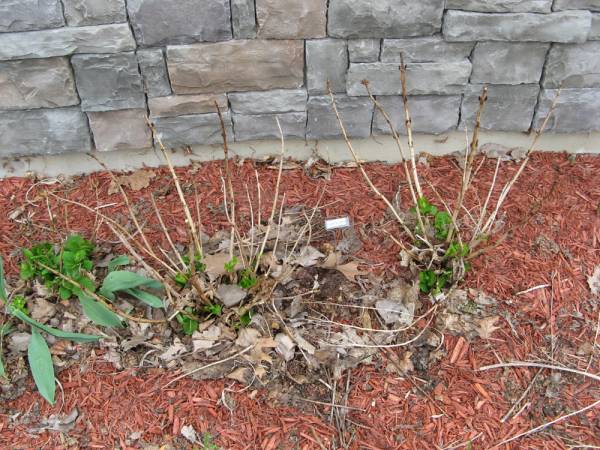
May 1st, the first picture. Later than normal with the cold weather.
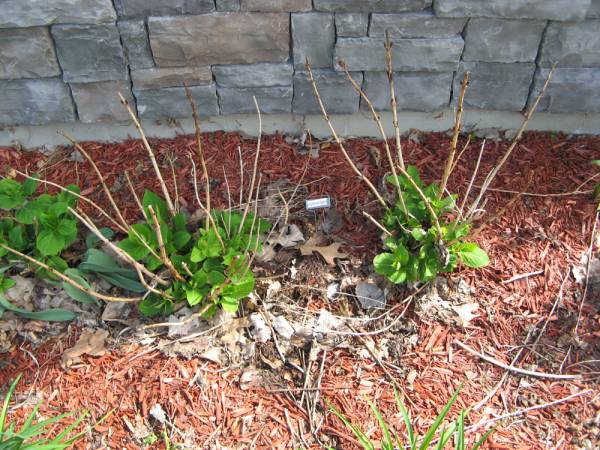
May 12th, growing good.
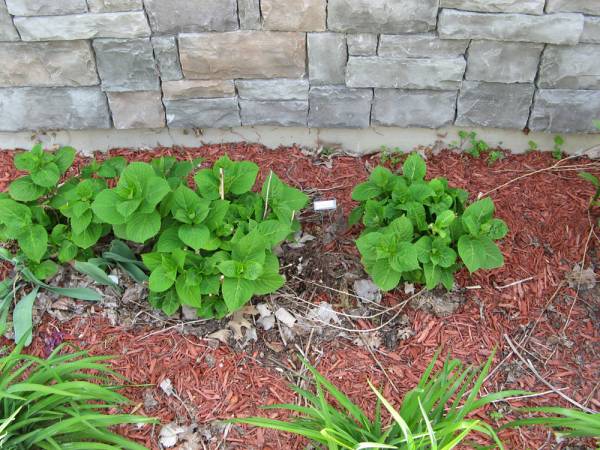
May 26th, getting bigger, you can see the first of the flower buds.
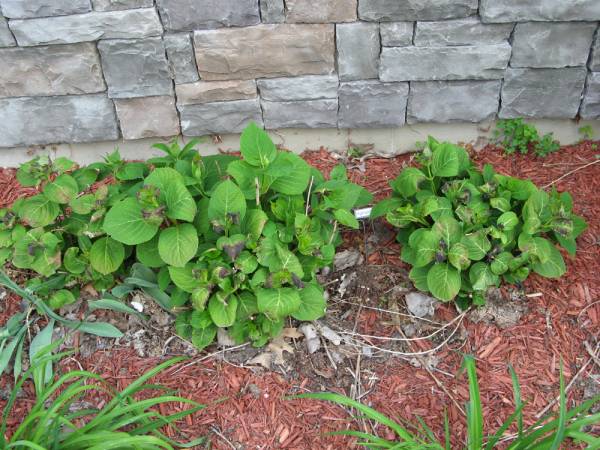
June 1st, freak late frost, pushing things back again, flowers will be later this year.
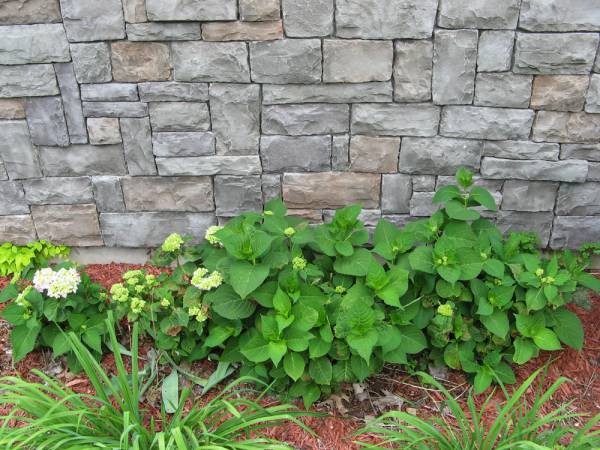
June 17th, the smaller ones on the left are just about blooming, the bigger ones on the right still building on greenery.
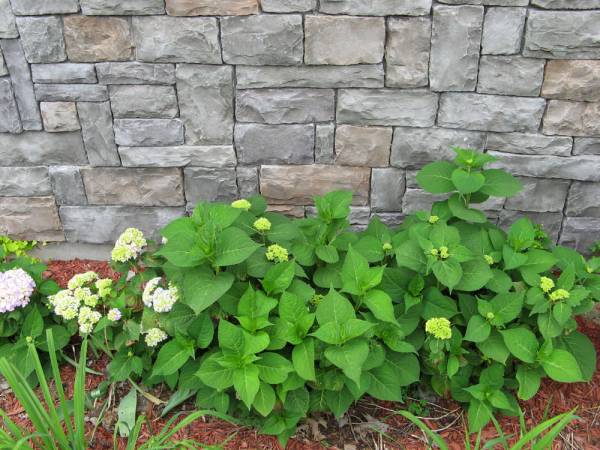
June 22nd, the first bloom, pink, on the far left.
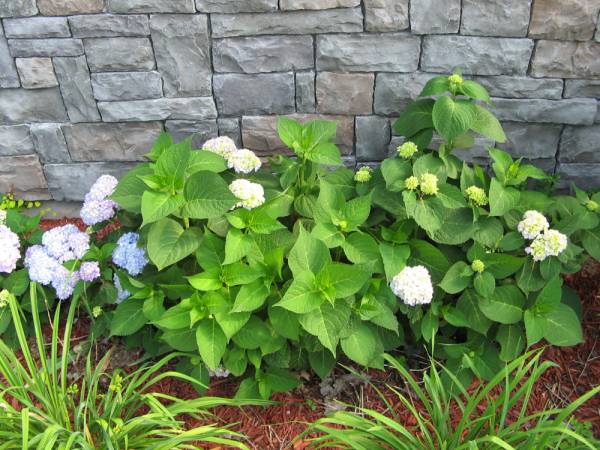
June 30th, now some blue blooms on the left, and the big one is about to bloom.
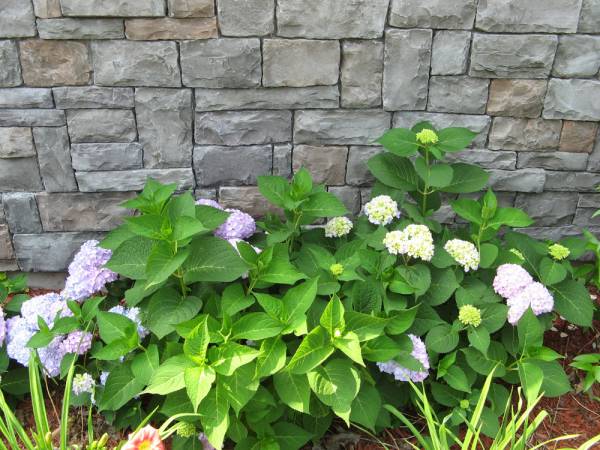
July 6, big one is blooming.
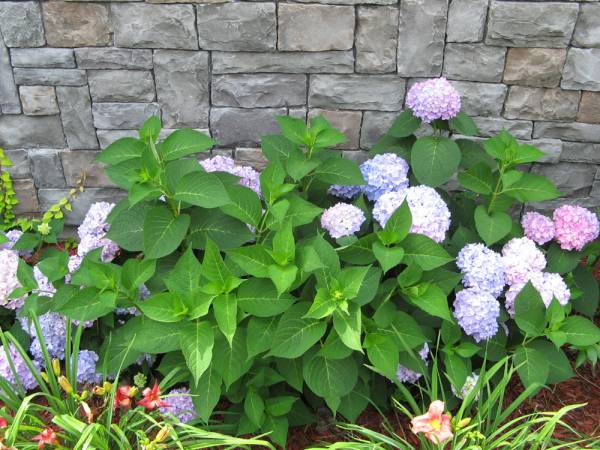
July 22nd, very bloomy.
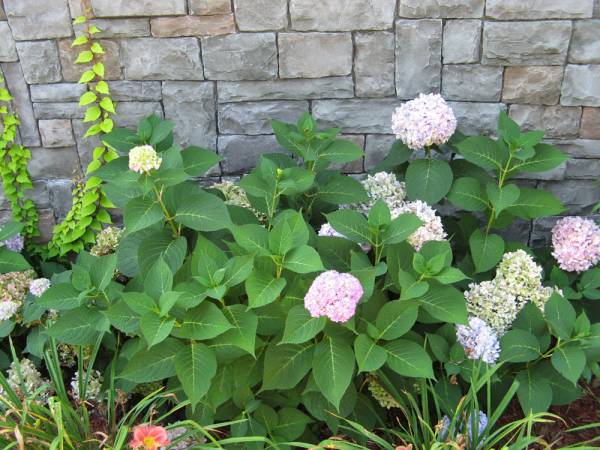
August 17th, older blooms are fading, new wave starting (this year’s wood).
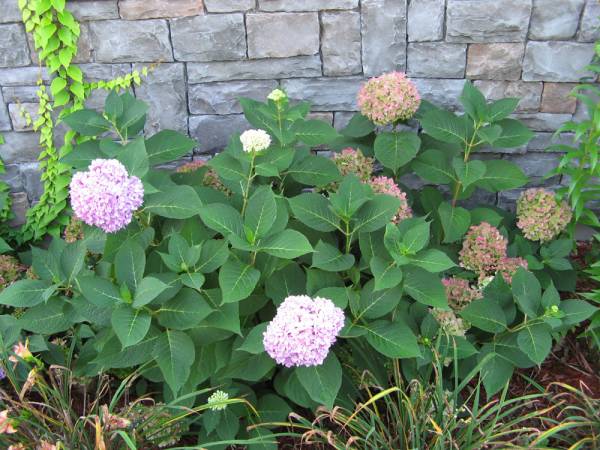
Sept 17th, notice the old blooms turning a dark red – this adds additional interest that I really like.
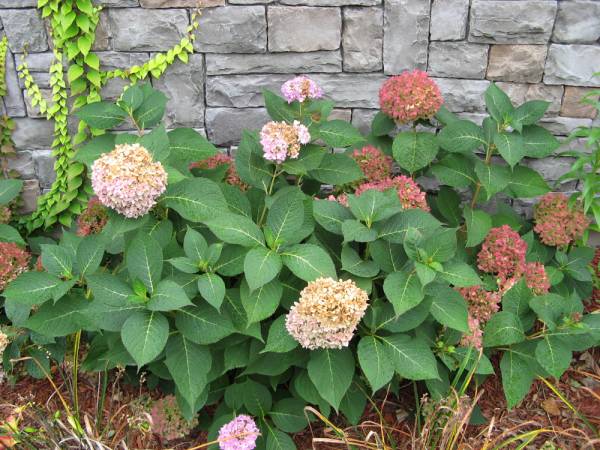
Oct 15th, still blooming, and check out the deep red spent blossoms.
Then it was killed last night, Oct 24th, in a hard freeze.
So, we had blooms from June 22nd to Oct 24th and this was a very late starting year. Usually it’ll be blooming by early June. I really like how even the old flowers still look like flowers because they redden. Some of my blossoms were blue, some pink. My soil naturally produces pink blooms but I try to change them every once in awhile (with obviously mixed results).
I do protect these during winter. I put a fence around them, like a coil, and then loose fill it with leaves, as much for the rabbits as the cold.
So there you go, big blooms for four months. I like it. I recommend it. To view all the pictures I took of it this year go here.
Butternut Squash & Squirrels
October 19th, 2008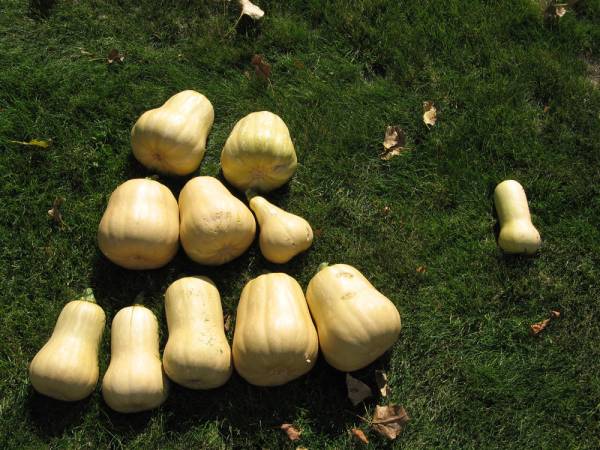 So, I increased the amount of space devoted to edibles this year in order to save money. Involved in this was picking new spots that are NOT garden beds to plant things to see if they’ll grow.
I planted some squash on the south side of my house near my raised beds (but not within them) where I plant veggies yearly. This area used to be full sun but I realized this year that the tree back behind it has growth enough to make it only part sun. Additionally I assumed that since the spot where I planted my squash was well rested, it had been covered by mulch for 5 years, I thought I wouldn’t need to improve the soil. I planted it on the corner just outside a raised bed after digging away the mulch, and my plan was the wrap the vine around the raised bed.
So I planted my squash, and it wouldn’t germinate, because the squirrels kept digging up the seeds I planted and taking them. So, eventually I started seeds in pots and transplanted the vines.
Meanwhile, out in front of my house in one of my ornamental beds (that has very improved soil and is in full sun) a squirrel apparently hoarded my stolen seeds, and one of them sprouted. I decided to let it grow, and I’m glad I did. For without that squirrel, I’d have hardly any squash.
In the picture, all of the squash on the left was planted by the squirrel, all the squash on the right was planted by me. Notice the difference. In total my squash weighed 1 pound 6 ounces. The squirrel grew 41 pounds of squash, including a whopping 7 pounder which is about twice as big as the typical store bought kind I normally find.
So, it is official, at least where butternut squash is concerned. Squirrels are better gardeners than I am.
I like butternut squash because of all the types of squash, I think they taste the least bad. Honestly, after eating some travesty of a squash preparation at a family Thanksgiving when I was like 10 I’ve avoided them like the plaque, but I’ve since warmed up to them and cook butternut and spaghetti squash regularly. They also have a really long shelf life when properly stored, up to a year even, and are incredibly healthy.
As to how to cook them, try my butternut squash soup recipe. It’s good.
Fall is for planting….. Fruit
September 24th, 2008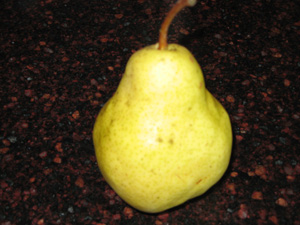 Fall is for planting they say, you’ll see it all over when you go to the nursery or look at mail order catalogs, and why? Well, despite anecdotes about Spring showers, Fall actually has more rainfall AND the ground is also warm. Which all told makes it a good time to plant something, especially trees and shrubs.
As I sit here eating an amazing pear from my garden (despite recent wounds to my pear tree) my advice to you is to plant fruit.
It isn’t just because fruit trees save you money in the long run with free produce. But you simply get a better quality item than what you buy in the store. See, for many types of fruit, letting it ripen on the tree makes it infinitely better. Fully ripe fruit though spoils quickly and bruises easily and so doesn’t ship well, meaning, you can’t get it at the supermarket.
I leave my pears on my tree until they’ve turned a little yellow, and most importantly, their flesh gives when I poke a finger at them. At this point they’re perfectly ripe, and a dream to eat. They’ll last at most a day or two on the counter before they are overripe, but man are they good. Canned pears are of course good because they are seeped in heavy syrup. Imagine if you will, a pear that has that syrup on the inside, that is what you get when you leave them to ripen on the tree.
Pears are of course not the only fruit (or veggies for that matter) that tastes better when left to ripen on the tree or plant. Most fruits become sweeter this way, for particulars I’ve heard very good things about apricots.
Now, you don’t need a big yard or a big wallet to plant a fruit tree. I remember a conversation with my Dad a couple years ago where he said he thought fruit trees cost $200 each, no, they don’t. I was just at Home Depot and they had them for $12.99, and these are 5-6 feet tall, and could likely bear lots fruit in 3 years (my pear tree originally came from Lowes, I paid like $18 for it, I planted it in the Spring of 2004. In 2005 I got like 1 pear, in 2006 like 5, this year I got like 40). Some will tell you to pick immature fruit off younger trees to help them grow bigger, this is true if you’re running a commercial orchard. For the backyard gardener though, you don’t necessarily want your tree to grow brigger, and so let those fruits ripen and eat them.
And yes, you can keep a fruit tree small. Now your Lowes or Home Depot or even typical garden centers may not have a huge selection of dwarf or semi-dwarf hybrids, but they’re out there. My favorite source for fruit trees is StarkBros.com they have a huge variety, they send good plants, and most importantly, they have dwarves and semi-dwarves of nearly every type of fruit. If you have four square feet of garden you can grow a dwarf fruit tree believe it or not. They really don’t require a lot of room.
Another complaint is that fruit trees are messy, well, yes, they drop bad fruit, much of which will be destroyed by critters and inedible. Get yourself a compost tumbler or compost bin for all that extra stuff, or just feed it to the wildlife. We have a big old fat groundhog that lives under our shed and eats our pears. Which is fine by me, better him than something else. He’ll grab a pear and it it like a human eats corn on the cob, its amusing to watch.
For the record, I have a relatively small yard, and I have… 1 pear tree, 1 apple tree, 1 cherry tree, 2 grape vines, 2 hardy kiwi vines, a raspberry patch, a strawberry patch, a blueberry patch, and an asparagus patch (thats just in and around my ornamentals, that doesn’t even count my vegetable garden). Plus, I’ve ordered a dwarf apricot from Stark’s for planting next Spring. You don’t need a lot of room for these.
Pear Tree Down
September 18th, 2008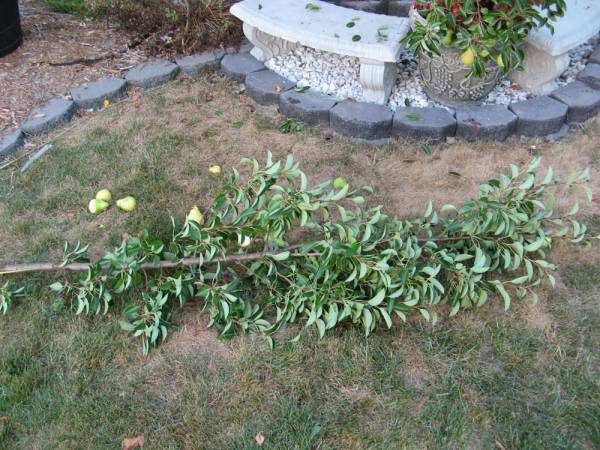 So, a couple weeks ago (I’ve been so busy it has taken me this long to blog about it) I woke up to a sight… my pear tree was missing it’s trunk.
Planted in 2003 this tree was getting fairly large, and bore a good deal of fruit this year. It was around 7 feet when planted in 2003, and now probably reached close to 20. The base of the trunk was maybe 5 inches in diameter, overall, starting to become a fairly big tree.
So I walk out there and as you can see in the picture about 6 feet of the top of the central leader had been broken.
We had no rain (notice the brown grass, we had a mini drought at the time) we had no wind. So my thought was a critter had climbed the tree to get at the fruit and the extra weight had caused it to snap. We do have a couple fat ground hogs, so I figured such a thing was possible.
But then, I thought, why would the animal climb to the top of the highest part of the tree instead of going after the low hanging fruit?
So in the end, I decided that this was likely caused by the fruit itself, and that seems odd. Pears, of course, evolved growing fruit, and so the tree should be capable to hold up the weight of it’s own fruit, right? I guess not.
So, for those of you with younger fruit trees out there, be mindful of the weight of that fruit, it can cause damage.
New Wayside Gardens Coupon
September 18th, 2008New coupon for Wayside Gardens I got in my email. I get a lot of plants from them, they’re good people.

One Massive Sunflower
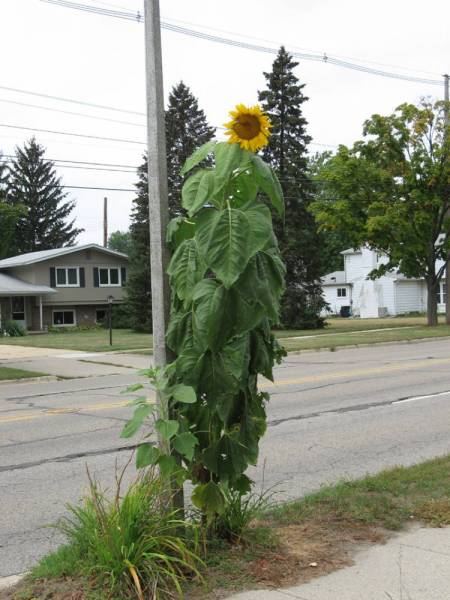
September 5th, 2008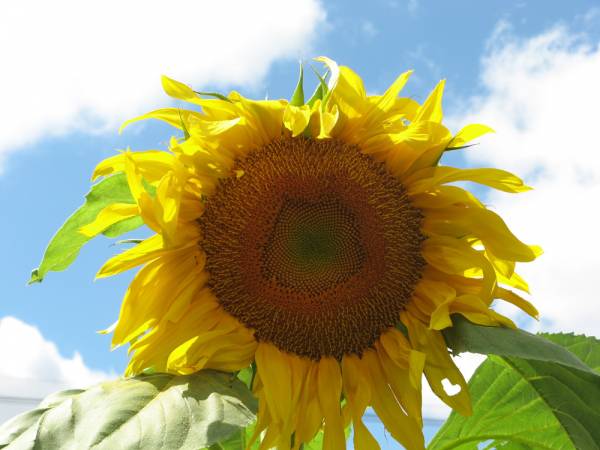 On a whim I saw this packet of seeds at the store for “Massive” sunflowers and bought them. I put them in various spots in my landscape, here and there, and boy, are they massive.
The leaves are absolutely huge, the stalk is atleast 3 inches in diameter, and the flowers are massive as well. The one pictures is now 18 inches across and thick with seed, I kid you not. Huge flowers.
They also grew to about 10 feet tall, as shown by the other one in the picture below. I’ll try harvesting the seeds from them, but mostly I grew them as a curiousity and for a bit of height, and I am pleased. I’ll probably get more next year.