
How to Grow Zucchini
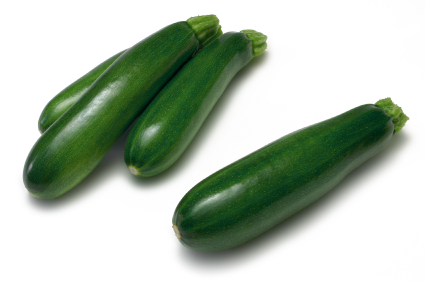

Days to germination: 4 to 8 days
Days to harvest: 60 days
Light requirements: Full sun
Water requirements: Frequent regular watering
Soil: Well fertilized with good drainage
Container: suitable for some bush varieties
Introduction
Like tomatoes, zucchini is another popular favorite with home gardeners. Healthy zucchini vines can produce a huge harvest each year, and many people end up trying to give away their extra zucchini because they have so much of it. It’s often called “summer squash” as well.
Most zucchini varieties grow as a spreading vine, which can take up a lot of space. You can conserve space by training the vines up a trellis, and there are also some bush varieties. Most zucchini are long and tube-shaped but there are some round varieties too.
Zucchini is a very flexible vegetable that can be used either raw or cooked. You can even use zucchini in baked goods, like bread or muffins. They are very high in vitamins A and C, manganese and fiber.
Starting from Seed
Zucchini plants can be started from seed either indoors, or directly in the garden. You should start your zucchini seedlings indoors about 2 weeks before your last frost date. Zucchini grow very long roots, so start your seeds in small pots that are several inches deep and be very careful not to break the roots when you transplant. The seeds should be planted about 1 inch below the surface of your potting soil.
Because you can get 16 or more fruits per vine, you really don’t need that many plants. Three or four is usually enough for a family. If you get too over-zealous, you will almost certainly be overrun with zucchini at harvest time.
Alternatively, you can sow the seeds directly outdoors after the threat of frost is past and the soil has warmed up. See the transplanting section for more on planting right into the garden.
Transplanting
You should plant your zucchini in the sunniest part of the garden, and they love the heat.
If you are planting your seeds directly into the garden, plant the seeds about 1 inch deep, with about 6 seeds to a small hill. If they all sprout, thin down to about 3 plants per hill.
With seedlings, you have to prepare your garden area by digging the soil thoroughly so that it’s loose. To protect the roots, you should loosen the soil at least 6 inches deep. If you are using larger seedlings, you may want to dig deeper. Mix in compost or aged manure, for these heavy-feeding plants.
As mentioned, zucchinis have long tap roots, so you need to be careful when you transplant that you don’t break the roots. Dig a hole deep enough that you can set in the seedling without having to fold up the longer roots.
If you are planting more than one hill of zucchini, you should allow plenty of space between them. Bush plants need at least 3 feet on all sides because they will get quite large. Vining zucchini that are being grown upward on a trellis can be about a foot and a half apart.
Growing Instructions
Water your zucchini frequently and don’t let them completely dry out, especially once they start to set fruit. Give them a good soaking about once a week. Take care while watering to keep the water off the leaves as much as you can to reduce any problems with fungus or mildew.
Once the plants have grown to a decent size, their broad leaves will help keep the area weed-free by shading out invading plants. To keep your vines thriving, give them a good doze of fertilizer each month of the summer.
You can control the amount of fruit you get from each vine by picking the extra blossoms off once a few zucchini have begun to form. If left to themselves, a zucchini vine will keep on producing all through the summer until the weather gets too cold. The blossoms don’t have to go to waste either. Add them to a summer salad for some color. They’re edible and tasty.
Containers
Zucchini generally isn’t considered a container-friendly vegetable, but there are a few varieties that grow in a fairly compact bush that would work in a large container. Little Gem or Eight-Ball form bushes with fruit in the middle instead of long vines, and work fine. Your container should be 2 to 3 feet across, and at least 3 feet deep.
Pests and Diseases
There are several pests you need to watch for when growing zucchini. When it comes to insects, Striped Cucumber Beetles and Squash Vine Borers are your worst enemies. The beetles are fairly obvious on the leaves and blossoms and can be picked off by hand. Organic insecticides with pyrethrin can work quite well. If you are really struggling with beetles, you may want to even cover your young plants with a light sheet of mesh netting until the blossoms form. You need to remove it though, or your plants won’t get pollinated.
The vine borers are hard to deal with because they dig into the stalk, making them very hard to detect until your plant is already dying. You can cut into the stalk (along the length, not across) and pick out the insects, which may or may not kill the plant anyway. If you bury the cut portion, it may heal and even grow new roots.
For diseases, you need to watch for wilt and powdery mildew. Bacterial wilt can be spread by cucumber beetles, which is another reason to control those insect pests. If your plants develop wilt, there is little you can do. The leaves will turn yellow, and wilt right to the ground. It can happen practically overnight. Pull up the plants before others get infected.
The other threat is powdery mildew, which looks like powdery dust on the leaves of the plants. It thrives in humidity, so do your best not to wet the leaves during watering. Also, water the plants early in the morning so any water on the leaves can dry before nightfall. You can spray the plants with a fungicide as soon as you see the powdery spots. The effected leaves will eventually yellow and drop off.
Harvest and Storage
And while it might be tempting to let your zucchini grow really large, the best flavor comes with the smaller fruit. Large ones start to get woody, and the seeds are getting hard inside as well. Pick them around 6 to 10 inches long. They will grow quite quickly, so plan on checking the vines every couple of days.
It’s almost inevitable that one or two zucchinis will be missed, and you will discover a huge one growing in a corner somewhere. You can still use it, but it will likely work best grated in a baked recipe (like muffins).
Handle the fruit carefully once you’ve picked them off the vine. The skin is very thin and it can get scratched or bruised easily. Zucchinis don’t hold their flavor very long after picking. You can store them in the fridge but should use them up within a week.
March 16th, 2012 at 5:12 pm
How often should you water and for how long. I like to grow squash(summer and butternut)zucchinis, beats, carrots, tomattos,beans, and pumpkins but can never tell if I’m over watering or underwatering. My dad use to do the watering for me when I was younger and I believe he watered every day for probably 5 to 10 minutes but I’m not positive as we got older we got built in sprinklers and they got watered every morning for 15 minutes but if I’m using a hose that seems to be way too much water to me. Any advise?
July 5th, 2012 at 7:08 pm
Thanks for the useful info about growing. One slight mod is suggested: zucchini squash is a poor source of Vitamin A, and only a modest source of Vit. C and fiber. The manganese content isn’t included in USDA nutrient data, so I don’t know how you have decided it is a good source of this trace mineral. I would doubt it, though, because the various squash species are generally not good sources of most trace minerals. However, like most plant foods, squash is a good source of potassium.
Nutrient values can be easily looked up here: http://ndb.nal.usda.gov/ndb/foods/show/3247
July 8th, 2012 at 2:52 pm
my zucchini plant roots on not deep and no luck in containers
July 9th, 2012 at 7:18 am
I found a bag of old opened potting soil in my shed. It was dry and didn’t look fresh. Does potting soil go bad or could out door animals cause any kind of fungi or bacteria that will kill plants if I used it?
July 29th, 2012 at 10:41 am
We’re growing a second crop of zukes and yellow squash as we lost many to squash borers. I know it is recommended to pile dirt over the stems after squash borer “surgery” has been done as the plants can then grow some new roots. This made me wonder if planting new seedlings deeper than what is usually recommended would help to make the new plants stronger, say up to the first set of leaves like we do with tomato plants? Is this worth trying?
Also, No fear of squash borers now as their cylce has the caterpillars coming out in late June, right?
Thanks for your attention.
Lin
April 3rd, 2013 at 10:21 am
To grow in containers how important is the size of the container? – can you grow Raven zucchini in a 1′ by 1′ container
May 1st, 2013 at 7:42 am
should i cover my zucchini in the hot afternoon sun
May 25th, 2013 at 11:23 am
if not interested in eating zucchini blossoms,should I leave them on the plant or pluck them off?I have heard that removing the blossoms promotes growth though I’m skeptical.Thanks
May 30th, 2013 at 11:53 am
Our Zuccini plants have grown and blossoms have come and gone and still no zuccini. I’m worried because the plants have grown so big it looks as if the roots are exposed. Should I add more soil or is this normal?
June 18th, 2013 at 4:33 pm
Our zucchini plants have blossoms but no zucchini growing from them> Do we need bees to pollinate?
Our plants look very healthy.
June 27th, 2013 at 12:04 pm
Hi, im wondering if growing them up a trellis is a good idea or would they rather grow them on the ground? Im a first timer for growing zucchini as i am only 15 and i love gardening, just trying for some good tips from someone who is experienced and knows whats going to happen. P.S. im in zone 5 and only have one plant
June 29th, 2013 at 1:05 pm
Hi,
my 2 plants are growing brilliantly in containers and I am training them up supports in my greenhouse.
The problem is that the plants produce huge flowers that eventually fall off but there is no fruit on the bare stem.
As a novice to growing this plant can you give me advice on watering, feeding and pollination.
Thanks John
July 5th, 2013 at 8:35 am
my zucchini plant got sooo big the leaves are really big and covering the zucchini and the zucchini doesn’t get to big and then they get rotten and die off what should i do. should i cut some of the leaves down
July 6th, 2013 at 1:42 pm
I have two huge plants that I got at a greenhouse!! I would like to know if you can or should trim back the leaves a little and are the stems eatable? Thanks for all the good tips I read above!!
July 11th, 2013 at 8:22 am
my zucchini plant got sooo big the leaves are really big and covering the zucchini and the zucchini doesn’t get to big and then they get rotten and die off what should i do. should i cut some of the leaves down
July 15th, 2013 at 3:35 pm
I have two zucchini plants and am seeing some success but some of the fruit starts to shrivel and turn yellow. Is this an over watering issue or something else?
July 15th, 2013 at 3:37 pm
Plants are doing well but some of the fruit is wilting and turning yellow at about 3-4 inches. Is this a water issue or something else?
July 16th, 2013 at 6:19 am
Our zucchini plants are very large and have flowers but I see no signs of veges. any suggestions? Do the flowers come first?
July 20th, 2013 at 5:49 am
I too grew zucchini in the ground this year and the leaves are so large that they are covering my pepper plant and tomato plants. Can I cut some of the leaves off to give my plants some sun. I am not worried about having a bumper of zucchini.
Thank you,
July 21st, 2013 at 9:49 am
Hi. I am growing summer squash. I have seen alot of blooms but they leaves below it turn yellow and die. I need help what should I do?
July 21st, 2013 at 3:49 pm
Someone gave me 7 zucchini seeds, and I got 6 started and planted in back of my condo. They’ve taken off without much care, and I’m learning as I go, but I just harvested my first zuke — about 6 inches. Yay. Questions: should you cut off the dead leaves? (There’s a rule against planing veggies in my condo community, so want to keep them “pretty” and under the radar.) Also, are they annual or perennial? Do you leave them to bloom again or remove them in fall?
July 29th, 2013 at 6:13 pm
So this may be a dumb question, but I’m totally new to the garden scene. When you say hills need to be so far apart and you can have X # of plants per hill, how big are said hills? I feel dumb asking this but I’m planning on making a good sized garden in my back yard next year and doing away with trying container plants as I don’t have much luck. I want to get all the info I can now so I can do this right come next spring. Also with different plants requiring different types of soil do I just put said soil in the hole of said plant and not over the entire garden? How do I get different types of soil? When I go to my local homedepot I only see a bunch of bags saying veggie soil. If there is like a gardening for idiots website or something please let me know 😉
July 29th, 2013 at 9:36 pm
I am a balcony gardener. My question is can I trim the excess leaves and male blossoms that are in abundance? Of the eight seeds planted four of them have only male blossoms. I’ve had to “paintbrush-pollinate” the few female blossoms due to lack of bees & bugs on the third floor flat I live in. Thank you for your help
July 30th, 2013 at 9:10 am
This year ,I have put zucchini plants in my back yard.
They produce large leaves and flowers but 4 in. zucchinis and they
are rooting from the stem. I have cut some of the very wide leaves still no results. What do I need to do?
Thank you
July 31st, 2013 at 8:18 am
@KRE – do not trim excess leaves, there is no such thing as an excess leaf. Those leaves all produce energy which feeds fruit production.
Yes you can trim excess male blossoms… and the best thing to do with them is to eat them. You can stuff them, batter them, and deep fry them, or pan fry them, or add them to stir fry or pasta dishes. They don’t keep long so it is best to pick them the day you intend to eat them.
August 4th, 2013 at 10:32 am
my zucchini in a pot starts good zucchini, and then they seem to turn yellow and shrivel.
August 11th, 2013 at 2:33 pm
IF your female flowers are not developing fully into zucchini, you need to hand pollinate as the bees are slacking.
See here: http://www.gardeningblog.net/2012/08/01/how-to-hand-pollinate-squash-zucchini-pumpkins-cucumbers-and-watermelons/
August 13th, 2013 at 1:14 pm
I’ve grown beautiful zucchini plants in the ground with plenty of flowers, but I’m not getting any fruit. What am I doing wrong?
March 28th, 2014 at 6:25 pm
what is the difference from Mexican type?
April 17th, 2014 at 5:57 am
Thank you for the great information. I live in Wetumpka, Alabama and had a very successful first year zucchini crop last year. This year, I want to harvest some of the zucchini blossoms. How is that accomplished and does it affect the zucchini produce?
July 4th, 2014 at 3:31 pm
Hi there Iam wondering why my zucchinis grow to about 6inchs and then they die….please help we love them BUT cannot grow any……HELP
THKS DEAN
June 19th, 2015 at 5:25 pm
I see your comment about NOT cutting excess leaves. I have been doing this for years and still got many zucchini’s. If I don’t cut some extra leaves the leaves will cover other plants and they don’t grow. Does cutting stems/leaves really hurt the plant? What about cutting off the flowers before they even bloom.
June 29th, 2015 at 9:26 am
I find this a bit strange but I harvest a garden every year of yellow squash, zucchini, tomatos, cuccumbers…etc.. well this year I decided not to go so big and just do tomatos and cucumbers. well to my surprise I have a squash or a zucchini plant growing, since I did not plant and leaves look very similar , I’m not sure which one it is. is this possible for this to grow without me even planting that this year only in prior years. ??????
December 24th, 2015 at 6:46 am
Left over seeds in the soil… we call these “volunteers.” You have a volunteer squash plant.
July 23rd, 2015 at 5:23 pm
Our zucchini plants are growing and flowering but the fruit does get around three inches long ant rots. What we are doing wrong?
December 24th, 2015 at 6:37 am
Try manual pollination. This is what happens when the flowers do not get pollinated.
April 21st, 2016 at 3:38 pm
i put black beauty heirloom zucchini in my raised bed thats 10.5 inches tall. will that be enough root room for them? please tell me they’ll be fine with about 8-10 inches of soil,very,compost, and peat moss mix???
April 23rd, 2016 at 4:32 am
yes