
How to Grow Sweet Potatoes
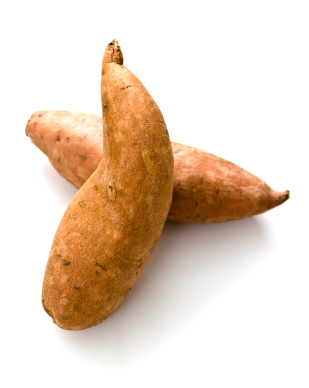

Days to germination: Not grown from seed
Days to harvest: 90 to 120 days
Light requirements: Full sun, or partial shade
Water requirements: Consistent watering
Soil: Fertile and well-drained, low nitrogen
Container: Definitely not
Introduction
First of all, sweet potatoes are not the same as yams. In North America, the terms are used interchangeably but they are two very different vegetables from different plants. Most sweet potatoes have orange flesh though there is some varieties that produce yellow or purple potatoes for something unique on the table.
Cooler climates are not well-suited for growing sweet potatoes but they are otherwise easy to grow if you have 4 months of very warm weather. This is one of the reasons that sweet potatoes are a common crop in the southern United State. Some varieties will mature in only 3 months, such as Georgia Jet or Centennial which would do better farther north.
Sweet potatoes are usually cooked, but the raw flesh can be added for an interesting addition to a salad or made into crunchy “chips”. The sweet root vegetable very high in vitamin A, and are also a good source for vitamin C, manganese and copper. You will also get some iron in there too.
Starting from Seed
Gardeners don’t usually start sweet potatoes from seed, but rather from “slips” which are really just pieces of potatoes that have started to sprout. It’s basically the same principle as with using seed potatoes when you grow regular potatoes.
You can start your own slips with store-bought potatoes but they can take up to 6 weeks to develop so most home gardeners buy them ready-to-plant. If you want to give it a try, take a supermarket sweet potato and put it in a jar or glass of water so that the rounded end is under water. You can hold it in place with a few toothpicks stuck into the sides to keep the potato from falling into the glass. Picture an old grade-school science experiment.
It may seem silly, but many gardeners swear by this method. Start about 6 weeks before you are going to put them out. The potato should sprout some slips. You can either separate the sprouts or just plant the whole potato.
Slips should go out in the garden after the soil has started to warm up, about 2 weeks after the last frost. Laying out black plastic can help speed up the warming process. Even though their vines take up a lot of space (see below), you can plant your slips about 2 feet apart.
You plant your slips just like you would a seedling, leaving the leaves above ground level. They may or may not still be attached to a piece of sweet potato. Purchased slips are usually just the sprouted part (no potato attached).
Growing Instructions
Sweet potatoes will vine up to 20 feet and will produce tubers underground all along the length of the vines. As they grow, they root down when they touch the soil and produce a tuber. Then the vines just keep growing. So you can’t grow sweet potatoes on a trellis and you shouldn’t locate your plants where the vines will sprawl outside the garden area (like the lawn).
It also means that you shouldn’t try to move the vines once they’ve grown or you might uproot a potential potato.
You shouldn’t need to fertilize your plants but if you do, use a low-nitrogen mixture or you will end up with leafy vines and no potatoes. Sweet potatoes don’t like to compete so keep the patch well weeded until the vines grow out. The leaves will soon shade out most weed plants.
Too much water can make your larger potatoes split, so watch the calendar and reduce the watering when you get to about 3 weeks before harvest time.
Containers
Considering how the plants will produce underground tubers along the vines, there really is no way to adapt sweet potatoes to container gardening.
Pests and Diseases
Wireworms are one insect pest that can damage your sweet potato crop by eating into the growing potatoes. They are pale yellow to light rusty brown. Unfortunately, you can’t do that much about them. Leaving a large chunk of “bait” potato in your garden can attract them, making for easier capture and disposal. There are some natural predators that can be applied to the garden, such as some species of nematodes.
A more serious pest is the sweet potato weevil. It’s a small insect with a black body, red head and long black nose. If you see them on your plant, you likely have a problem even though it’s their larvae that are causing the most damage and not the weevils themselves. They are unlikely in your soil unless you have been growing sweet potatoes in other seasons.
Keep your garden safe by only buying slips that are certified to be weevil-free. Using your own store-bought potatoes to grow slips may introduce eggs into your garden. They can also live in morning glories (closely related plant) so never plant these flowers near your vegetable garden if you are growing sweet potatoes.
Because the tubers are growing so close to the surface, you can also have a problem with mice or other rodents. Mice can be difficult to get rid of in the garden but commercial poisons, baits or traps can help.
Harvest and Storage
Average sweet potatoes are 4 to 6 inches long, and each plant will produce anywhere between 4 to 12 of them.
The leaves of the plant will start to die back when its time to start digging up the potatoes. They grow right under the surface so don’t be too rough when you dig. You can bruise them quite easily. Any potatoes that are cut by the shovel should be used first and not stored. If a frost hits before you’ve harvested, they will be fine. But once that happens, don’t put it off much longer.
You don’t necessarily have to wait until full maturity to dig up potatoes either. With a little care, you can dig small new potatoes without killing the rest of the plant.
For immediate use, keep your fresh sweet potatoes out on the counter and not in the refrigerator. They’ll last about a week this way. Unlike traditional potatoes, sweet potatoes are not good for really long-term storage. Keep extra potatoes in a cool but dry place and they will be usable for about a month. If you’re doing that, don’t wash them first. They need to be very dry and washing will add more moisture, leading to quicker spoiling.
September 2nd, 2010 at 8:37 am
Thanks for the article. Contrary to what you have written sweet potatoes CAN be successfully grown and harvested from containers…and can even be grown from environmentally friendly reusable grocery store bags 🙂
June 7th, 2011 at 7:15 am
What if I only want to grow one really big sweet potato from a slip> Instead of letting the vine put down roots everywhere it touches soil, what if I train it up a trellis and have all the production go into one, hopefully, one enormous potato, more for show than for eating?
June 21st, 2011 at 1:34 pm
We’ve kept our sweet potatoes all winter. Just in tubs in the shop. They’re just as good now as they were when dug. The white potatoes are long gone.
September 7th, 2011 at 5:04 pm
What do you expect from someone who doesn’t even know proper grammar? Probably written by some guy in India who has never seen a sweet potato growing.
This whole article is just wrong: wrong info, wrong grammar. Then there’s the giant ad at the top that covers half the article’s title. Smooth.
Yes, you can grow sweet potatoes up a trellis or in a pot.
September 7th, 2011 at 8:05 pm
This article was written by a Canadian organic farmer who has lived on a farm almost her whole life.
It sounds like your browser is out of date if there is an ad covering half the title. That isn’t how the page is seen by most people.
January 18th, 2012 at 2:18 pm
Don’t be an asshole stan especially when someone took efforts & share their knowledge online FREE with everyone.
I came from a country that grow the best sweet potato in the world but yet – here I am looking for help growing my own crops. Thanks for the tips – I will give a try!
July 1st, 2012 at 6:05 am
i grew sweet potatoes on the white house garden
they all died
it was george bush’s fault
July 16th, 2012 at 8:51 pm
Here in upper Indiana, along the Wabash River, we regularly grow plentiful and huge Beauregard sweet potatoes. They do like sandy soil, and sun, and light watering. Mid-May to mid September is plenty long enough to grow football size sweet potatoes here. And … they DO keep very well all winter. Harvest gently. Leave laying the sun for a day. Move into a dark, warm room, laid out on blankets or newspapers for a couple weeks to dry and build up a tougher skin. Tjen gently move into dark cool storage for the winter. We keep ours in a metal tool cabinet on the un-heated back porch. The metal cabinet is the only thing we have found to keep the Mice out of them! They keep longer and better than Irish/white potatoes in our experience. Many times, in April we are eating the last, wonderful winter squashes and sweet potatoes from our cold porch.
August 12th, 2012 at 1:23 pm
Too bad, Obama…..maybe Mitt will have better luck 🙂
January 8th, 2013 at 3:58 am
This my first time at growing sweet potatoe. I have bought seedling and it is starting to grow along the ground but has no tubers growing into the soil as described.it is about 2 feet long. Why is this is?
February 10th, 2013 at 10:18 am
I have started a plant in my sunroom, just put a large sweet potato in some dirt. the vines are about three feet long now. I plan to put it in the garden this spring (April). I have no clue what I’m doing. Kind of like Obama. So if this doesn’t work who do I blame GW or Mitt. Just Kidding. anybody know how to plant these things. what is the slip? My plant has five vines a couple of feet long each. it is real healthy. do I cut it into pieces and plant them. any help would be appreciated. I live in Pa.
August 30th, 2016 at 9:33 am
I’m very sorry and not trying to be nasty but much of the initial info in this post is incorrect. Although the vines do put out tiny roots as they spread it is to hold and anchor the leaves upright. I have never had a sweet potato grow from any of the vine roots except for the spot where the slip was planted.
If you ever drive through Georgia or South Carolina you will see sweet potatoes growing on trellises everywhere. It saves a lot of room in the garden/field.
As for size, very few of my sweet potatoes are 4″ to 6″ long. A few yes, but most are far larger.
As far as eating fresh and them lasting a week on a table…no. Sweet potatoes don’t even sweeten until after a ten to fourteen day ‘curing’ period where the starch is turned into sugar.
Lastly, as far as keeping time, I have had sweet potatoes harvested in Sept. (I live in northern Virginia.) and was still eating them and giving them away in April when I ran out. If sweet potatoes only lasted a month in storage you would not need more than one plant each season! Oh, and I do fertilize mine, mainly with organic compost but also horse and chicken manure. Two years ago I had to use both hands to hold up one plant full of potatoes. I got 88 lbs. from 15 slips that year.
Again, sorry, I am not trying to be difficult but some of your info is just not correct. Take care.