
How to Grow Quinces
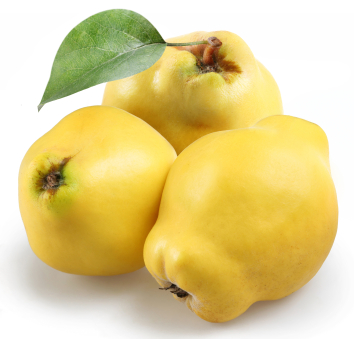

Days to germination: Trees are started from saplings
Days to harvest: 3 years
Light requirements: Full sun
Water requirements: Regular watering
Soil: Fertile soil, even with clay
Container: Somewhat suitable
Introduction
The quince is closely related to both the apple and the pear, and has a fruit that does look like a combination of the two though noticeably larger than either. A quince fruit can easily reach 6 inches in length.
The fruit is much more common through South America, Europe and the Middle East than it is in North America. You can grow quince between zones 4 and 9, as they can tolerate freezing temperatures during the winters as long as the flowers aren’t hit with a late hard frost.
Quince fruit is very tart and sour even when mature, and is seldom eaten raw though it does sweeten up if left to get soft after picking. Cooked dishes as well as jams and marmalades are the more common uses for quinces. They are high in fiber, vitamin C, antioxidants and magnesium.
Starting your Tree
When buying a quince sapling, take care not to just buy a flowering quince. They are bred for their spring blossoms and won’t produce a reliable crop of fruit. You need to get a quince variety that is intended for fruit production, such as Champion, Cooke’s Jumbo or Giant of Zagreb.
Choose an open location that can accommodate a 20-foot high tree at maturity. The crown will also be about 15-feet across once it reaches full size. The soil should be loose but a quince tree can tolerate having wet roots so even a location with poor drainage may suit.
The quince is a self-fertile plant, so you will get a crop of fruit even if you only plant one. Trees will produce more fruit if they have been cross-pollinated with at least one other tree though.
Tree Care
Quince trees aren’t huge, and thankfully won’t need all that much pruning to keep them in fruit-growing shape. The branches naturally grow spread apart without a lot of crowding. Each spring, before the new growth starts, prune out any dead branches and any that have grown to the point where they are rubbing on another branch (only 1 of 2 crossed branches should be cut off).
During the first year or two, cut back much of the new growth in the spring, keeping the tree down to 4 or 5 main branches. This will help get the roots established and create a good foundation for future branch growth. After that, you can let it grow as it pleases.
You can fertilize your tree each year but only with a low-nitrogen mix, or you will severely reduce your fruit production. Water your trees whenever you have a dry spell in the weather. They are not bothered by water-logged soil so there is little risk of over-watering quince trees.
Containers
Since quince have naturally shallow roots, they may survive fine in large containers (at least a half-barrel in size). True dwarf quinces are not common since the tree is naturally quite small, compared to many other fruit trees.
If constrained to a pot, quinces may grow as a bush rather than a true tree.
Pests and Diseases
The biggest disease threat to quince trees is fire blight, which also effects apple and pear trees. It primarily attacks the new buds each spring, and they turn black and die off. You can usually see a brown seeping in any infected twigs.
It can be difficult to get rid of, but if you cut away infected branches immediately, it can help. Blight usually doesn’t kill the tree right away, so you may have a year or two to combat it without losing the tree. The next spring, spray the trees with a Bordeaux spray to keep the bacteria out of the new buds.
Apples and pears have blight-resistant varieties, but there really isn’t any such thing for quinces. With a little perseverance, you can usually overcome the disease though it may be a constant battle if its a problem in your area.
Besides diseases like blight, the quince is actually relatively free from other pest problems. There are no specific insects that target these plants, though any leaf-eating beetle or caterpillar can do damage in the leaves. If you see the silky “tents” of the tent caterpillar, either cut the branches off or burn away the webbing to keep the caterpillars from doing extensive damage to the leaves when they emerge.
Harvest and Storage
Quinces will get softer after the first frost, but they also damage easier during picking so most people try to harvest their mature quinces before that. If they are going to be cooked anyway, most will pick them before the frost just to make picking easier. For raw eating, after the frost will work better. Not only will they be softer, but sweeter as well.
Since the fruit is hard at maturity, the best way to tell when its ready to pick is the color. Quince should be a uniform light yellow color when picked. If you pick quinces before they are mature, they will not ripen or soften further so there is really no point picking young fruit.
Hard quinces will store in the fridge for a week or two, but their strong smell can make everything else smell like a quince. If you have a spare fridge, you might want to store your fruit there. Otherwise you might want to keep them in a tightly sealed plastic bag, which can hasten their spoiling due to moisture build-up so you should add a paper towel help keep them dry.
Because they do smell so strongly after they mature, it’s a common practice in some countries to leave a few out in a bowl to freshen the air.
Once established, a quince tree will give you fruit for around 30 years and it takes about 3 to 4 years before your tree will start bearing fruit for you.
October 31st, 2011 at 7:24 pm
Hi – I’m in Australia but my problem may be a common one. If my quinces grow to maturity (they often don’t) they go balck at the ends as they ripen and this usually spreads up the whole fruit. Is there anything I can do to stop this.
much thanks denise
November 11th, 2011 at 6:00 pm
hi i live in idaho and love quince fruit. have one little quince tree with about 20 fruits. is been getting cold at night and dont know if i should pick the fruit yet before they freez. love to eat them raw. thanks.
August 7th, 2012 at 4:43 am
I have a few plants I grew from seeds. Some leaves turn brown and plant dies. Can you tell me what I need to do?
September 25th, 2012 at 9:04 am
We have had 4 quince bushes for at least 10 years. They have grown from about 1 1/2 feet tall to at least 7 feet. They look healthy. We have had a lot of blooms but this is the first year to have fruit. We have 4 quince. I need at least 8 lbs to make quince jam. Which by the way is just delicious. What can we do to make them blossom and produce fruit. We have driven all over central NY looking for them, but no one knows where there are any.
Thank you in advance for your assistance
Judie Eaton
October 10th, 2012 at 2:15 am
I too love Quince! If you only have a small amount of the fruit, experiment with “jam” without measuring…core, chop (peel only if desired) and cook in a stove top pan or bake, with some water and desired amount of sugar (you might need lots) until pink and caramelized. The natural pectin makes it thick and spreadable…Fantastic on toast or with cheese, like brie.
March 17th, 2013 at 12:08 am
Hello Denise,
I don’t have much experience growing the Quince fruit, but I have had this problem that you mentioned with apples and the Bartlett pear.
What you are experiencing is the the disease {Fire Blight} which is generally deadly to your trees. It can be caused by over watering so well as by birds who have stopped at a tree which has the disease and then lands on your tree. Some trees that are susceptible to this disease is the Mock Pear Tree {only an ornamental tree}, most of the apples and pears. You can prevent this <maybe, by keeping the growing area clean no dead leaves on the floor, Keep the tree properly fed with citrus, fruit, avocado and nut fertilizer.
If you see that the branch tips have these black leaves, cut them about 2 inches from sound wood, please do not handle the bad leaves and dip your trimmers in acohol or bleach after each cut. Do carry a plastic bag to immediately throw the cut damaged branches in it; do not touch any part of the tree once you have handled the damaged leaves actually you should wear gloves in case you do need to handle the sound portions of the tree. Even though I disinfect my trimmers I use only these cutters for this purpose and never for any other plant or tree especially Roses. Once done, I keep a metal can where I burn the leaves or just keep them in the plastic bag, rebag the bag and thow it in the trash can. I rather burn them, though. If your neighbors have infected trees do tell them they may not be aware of this very bad plant illness. They'll thank you for it. I had to tell a neighbor and he was able to save his "Mock Pear".
Good luck,
-Dee
March 17th, 2013 at 12:13 am
Hello Denise,
I don’t have much experience growing the Quince fruit, but I have had this problem that you mentioned with apples and the Bartlett pear.
What you are experiencing is the the disease {Fire Blight} which is generally deadly to your trees. It can be caused by over watering so well as by birds who have stopped at a tree which has the disease and then lands on your tree. Some trees that are susceptible to this disease is the Mock Pear Tree {only an ornamental tree}, most of the apples and pears. You can prevent this, maybe, by keeping the growing area clean no dead leaves on the floor, Keep the tree properly fed with citrus, fruit, avocado and nut fertilizer.
If you see that the branch tips have these black leaves, cut them about 2 inches from sound wood, please do not handle the bad leaves and dip your trimmers in acohol or bleach after each cut. Do carry a plastic bag to immediately throw the cut damaged branches in it; do not touch any part of the tree once you have handled the damaged leaves actually you should wear gloves in case you do need to handle the sound portions of the tree. Even though I disinfect my trimmers I use only these cutters for this purpose and never for any other plant or tree especially Roses. Once done, I keep a metal can where I burn the leaves or just keep them in the plastic bag, rebag the bag and thow it in the trash can. I rather burn them, though. If your neighbors have infected trees do tell them they may not be aware of this very bad plant illness. They’ll thank you for it. I had to tell a neighbor and he was able to save his “Mock Pear”.
Good luck,
-Dee
P.S. disinfect all utensils including your gloves.
October 25th, 2013 at 8:09 am
In response to Judie Eaton’s inquiry about where to get Quince fruit: I live in Lancaster NY (Near Buffalo) and have a Flowering Quince tree in my backyard. In the spring there are small red flowers that bloom. This year it produced 20 or so fruit that are round, green, hard as a rock and bitter as bitter gets…and as my Uncle Norm used to say: “And I don’t mean MAYBE!!!” Anyway, all but 5 are still on the tree and the rest are already on the ground (except the one that I tried to eat…that one I threw as far as I could throw it!). Next year, I’d gladly send you the fruit so that you could make Jam or Marmalade. No fee; free shipping. I hate to see food go to waste. Up until I read your message, I didn’t consider those food! [email protected]
January 21st, 2014 at 10:10 pm
Is there an inseciside that I can use to spray on
the quinces to prevent them from getting rotten inside. The quinces look good from the outside but when they are ripe enough to pick they are already infested by some insect which seems to work from the core of the fruit.
It will be appreciated if you can give me advice as the fruit will be ready to pick as they are already starting to yellow.
Thank you for your input.
February 26th, 2014 at 9:48 am
Denise thanks for the information i too have a quince tree and needed some advice to treat my quince thanks.
June 1st, 2014 at 10:56 am
my quince has amazing output – even though it is a medium size tree, got over one hundred quince last fall. I am rebuilding my fence though and just hit root…..it is about the size of my thumb and am so worried about harming the tree – any advice!?
June 1st, 2014 at 4:12 pm
Is there an inseciside that I can use to spray on the quinces to prevent them from getting rotten ins inside . The quinces look good from the outside but when the are ripe enough to pick they already infested by some insect which seems to work from the core of the fruit
February 28th, 2015 at 7:11 pm
Raintree Nursery in Morton, WA sells a good variety of bare root quince trees–both for fruit production and flowering ornamentals.
They ship all over the country.
http://www.raintreenursery.com/Fruit_Trees/Quinces/
June 6th, 2015 at 2:38 pm
I’m growing a Smyrna Quince here in Connecticut purchased from Trees of Antiquity in 2012–it is bearing its first crop–8 quinces if they all make it–this year.
People asking about insecticides can simply follow a good spray regime for apple trees like this one: http://extension.unh.edu/resources/files/resource000503_rep525.pdf
Similar schedules can be found on a number of university extension sites and you ideally want to follow one for areas close to your location since that will match up with the insects and disease threats you will encounter. I use Captan to ward off Quince and Apple rusts in the spring (the first spring I didn’t and lost half the new branches), and Monterey Garden Insect spray (an organic product based on Spinosad) to deal with things like Codling moths and Apple maggots.
Note: “Flowering Quince” with their lovely pink blossoms are not the same as the yellow edible quince fruits we’re interesting in. My quince, like others of its kind, has two inch wide, pink-blushed white blossoms that appear at the ends of new growth after the first leaves have formed.
October 9th, 2016 at 3:53 pm
I’m growing a quince tree from the seeds. I planted them sometime last fall, around a year ago, but in a pot. It’s looking really great, very green, more bush form — I guess because it’s in a pot. Should I bring it inside for the winter? And should I move it to a bigger pot soon? Or plant it in the ground? Very new to this. Let me know.
January 9th, 2018 at 12:06 pm
Mackenzie, what hardiness zone are you in?