
How to Grow Okra

Days to germination: 10 to 14 days
Days to harvest: 60 days
Light requirements: Full sun
Water requirements: Regular watering but not frequent
Soil: Well-drained
Container: For smaller varieties only
Introduction
Okra is a wonderful and mainly trouble-free plant that thrives in hot weather (80 to 90F is ideal). Cool summers aren’t very suitable for growing okra, though northern gardens may get a small harvest. It’s a very popular vegetable in the southern United States, where is grows extremely well.
If you’re not familiar with okra, it can be a bit of an acquired taste. The edible pods have a sticky fluid in them which can help thicken up soups like gumbo. In some places, okra is actually just called “Gumbo” because that’s how people know it. Once you know how to cook with okra, it’s actually quite versatile. You can even eat the small pods raw.
The gummy nature of okra tends to make people think it’s a high-fat vegetable which is not true. Okra pods are high in fiber, vitamins A, C and K as well as folate and thiamine.
Starting from Seed
To get the most out of your okra, give it a head start with indoor seedlings. It’s a must in cooler climates. Put your seeds into small pots about 6 weeks before your expected final frost date for the season. Only cover the seeds with a quarter inch of soil. Keep the pots moist and they should start to sprout in just under two weeks.
Its somewhat traditional to soak okra seeds the night before planting to encourage quicker germination. It certainly can’t hurt but as long as you keep your potting soil watered, it’s not a necessary step.
Transplanting
Around 2 weeks after your frost date, you can put your okra seedlings out into the garden. Choose a warm spot that gets full sun throughout the day. Loosen the soil up and add some compost.
Space your plants to leave 2 feet of space on all sides, as the plants will be quite large when fully grown. If they are too crowded, they will have a much reduced harvest later on.
Because the leaves can have stinging spines on them (see more in the harvest section below), don’t plant your okra plants near garden pathways where you will frequently be walking too close. Also, the plants will grow between 4 and 6 feet high, so plan out your space to keep the okra from shading the other plants.
Growing Instructions
As mentioned, okra is a very easy plant to grow that doesn’t require a lot of work in the garden. Water it at least once a week but a few dry spells aren’t going to hurt established plants. You can fertilize your okra patch with standard fertilizer formulations to give them some extra nutrients.
Okra plants will get very tall but they are not the same as vining plants like beans or zucchini. You don’t need to provide a trellis or any support for your plants. They grow more like tall shrubs than vines.
Containers
Some varieties of okra will be too large for any reasonable container, but if you choose shorter-growing plants then you can do some container gardening. Your pots will need to be at least 5 gallons in size, though larger will be better. Find varieties that will grow under 5 feet in height. Annie Oakley is usually around 3 to 4 feet and would work well.
Black containers will attract the sunlight and help keep the soil nice and warm for your plants.
Pests and Diseases
One of the saving graces of growing okra is that it’s not overly bothered by diseases or insect pests. Keep a watch out for aphids, stink bugs, flea beetles and ants. They can all be repelled with regular insecticide and hand-picking. These insects usually eat the leaves and can be damaging to small plants. Full-grown okra plants are typically able to handle the damage with few ill effects.
Leaves can sometimes get powdery mildew, a whitish dusting of fungus that can develop when the leaves are left wet too often. You can treat it with fungicide, and prevent it by only watering right at the soil to keep the leaves dry.
Harvest and Storage
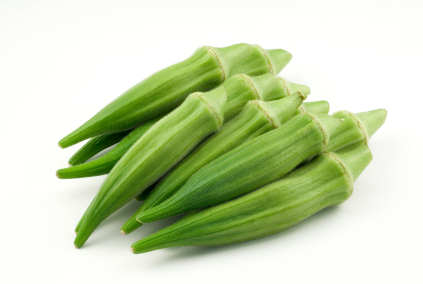
Once your okra plants start to flower, be on the lookout for the seed pods. They are the most tender when just a few inches long, and about as thick as your finger. Pods that are longer than 5 inches will start to be tough and stringy, so try not to miss any when you are harvesting. Okra that is just a little tough can still be used in recipes where the vegetables are cooking longer (such as long-simmering soups).
The pods grow very quickly, and the plant will continue to produce them until the winter cold sets in. A healthy plant will give you up to 2 pounds of pods, though smaller dwarf plants will have less.
Even though it will be hot outside, don’t try to harvest your okra pods in short sleeves. You simply must wear a sturdy long-sleeved shirt and wear good gardening gloves. The pods and leaves are covered in very fine hairs or spines that will irritate your skin. The spines aren’t actually sharp (like a thistle) but have a chemical that will burn the skin.
When cooking with fresh okra, wear gloves until you’ve added it to your dish. The “spines” are neutralized by the hot water when you are cooking, so aren’t an issue when actually eating it.
Some varieties are described as “spineless”, such as Clemson. Any designation of “spineless” usually refers to the pods only, so you still need a bit of protection when picking because the leaves and stems can still sting you.
Use your okra within a few days of picking, or store in the fridge for a week or two. Okra can be stored for later use by freezing the chopped pods. If you do freeze, skip the blanching step. It’s not necessary and will ruin the texture.
July 17th, 2012 at 7:38 pm
I live in Central Oregon and sorry to say we dont have lots of warm days. i do have a greenhouse where inside it get 100+. It does still gets sun but stays warm in there. would they grow better there? i have to plant in pots as no way to plant in ground. Thank You
August 9th, 2012 at 6:58 am
judy, I live in Bend! Did you plant okra this year? Ours is about 5 feet tall now and heavy with beautiful yellow flowers. I can’t wait until harvest…hope it pans out. Our nights have not been too cold lately so I have high hopes.
January 11th, 2013 at 11:12 am
You have to be carefull with okra. Day 1 you see a flower, day two flower wilts and you see the pod, day three the darn thing is 5″ long. I’m in Pa. and can’t go more than two days without picking (clean cut with sharp knife). If they get to long there real stringy and not good. have fun.
March 1st, 2013 at 2:20 pm
I find that some varieties of okra do well in super hot heat in arid conditions, but some of the popular Louisiana one do not. Maybe it’s the humidity.
June 30th, 2013 at 8:02 am
Thanks for the container tips.
Besides “how they know it,” this is why okra is called gumbo: (From Merriam-Webster’s Collegiate)
Origin of GUMBO
American French gombo, of Bantu origin; akin to Umbundu ochinggômbo okra
First Known Use: 1805
See also: http://aggie-horticulture.tamu.edu/archives/parsons/publications/vegetabletravelers/okra.html
And/or: http://www.bonappetit.com/blogsandforums/blogs/badaily/2013/02/gumbo-okra-and-oysters.html
July 16th, 2014 at 12:39 pm
I planted Clemson Okra this year. It is my first time to grow Okra. We have very hot summers, 100 – 111 degrees. We have also had lots of wind. The plants are doing well and I have okra but it is TOUGH no matter how small and I mean even 1″. We water daily on a drip system. We love okra but this is uneatable. Any ideas
December 19th, 2015 at 2:14 pm
Perhaps Clemson, being “spineless” has been genetically altered. I live in a desert climate too and am looking for a type that will be suitable to these hot arid conditions.