
How to Grow Hazelnuts
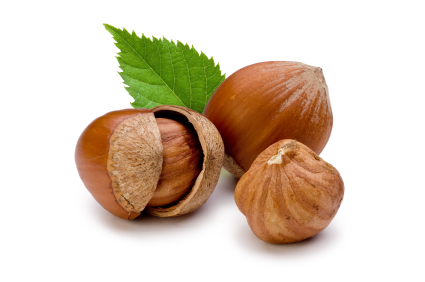

Time to germination: Usually purchased as saplings
Time to harvest: 4 years
Light requirements: Full sun
Soil: Well-drained soil
Introduction
Hazelnuts come from the hazel tree, but are also called filberts and sometimes cob nuts. The nuts can be eaten on their own, usually roasted but hazlenut is also commonly ground into a paste and used to flavor candies and chocolate. Hazelnut oils are also used in syrups. One particularly well-known hazelnut product is Nutella spread.
Hazelnuts can be grown from zones 9 up into zone 4 (even sheltered areas of zone 3). The cooler regions should stick to the American hazelnut variety as the European type is less cold-tolerant. As a crop they are grown extensively in Turkey, and there is a Turkish variety for that climate.
As with most nuts, they are high in protein as well as fat. There are also high levels of B vitamins and fiber in a hazelnut.
Starting Your Tree
Most people who start hazelnut do so with purchased saplings rather than by planting nuts. Many trees available will be grafted trees, meaning the rootstock is from one kind of tree and the top branch portion is of another. Typically, the Turkish hazelnut is used for rootstock to help with blight resistance. Grafted trees are perfectly normal, and will produce nuts as per their tops not the roots.
If you are going to grow hazelnuts, you will have to have the space for at least 2 trees. They are self-infertile and will not produce any nuts unless they are pollinated by another tree.
Your tree location should have space for mature trees around 10 feet tall, and between 12 and 15 feet across at the crown. Keep your trees spaced about 20 feet between them to allow enough room, but no farther than 40 feet or they won’t pollinate each other.
Dig a hole large enough to hold the root ball, and then dig down a little deeper so there is loose soil in th bottom of the hole. Plant the sapling, and keep it moist for the first few months. Then it should be fine unless you get a stretch of particularly hot or dry weather.
Tree Care
Hazelnuts tend to grow very bushy, and will sprout lots of suckers from the base of the trunk. To maximize your nut production, it’s best to cut away the extra suckers or sprouts as they form at the base and try to keep your tree trained to a central trunk shape.
Your trees are a more drought-tolerant than other nut trees, so you shouldn’t have to worry about regular watering unless the level of rainfall has really dropped. Water hazelnuts at least once a week during drought, but that should be all that’s required.
Once your tree has started to produce nuts, you can give it an annual fertilizer feeding though it’s not essential. A standard formula is fine, though a fertilizer designed for trees would be better.
Pests and Disease
One of the biggest threats to hazelnuts in North America is the eastern filbert blight. It will kill off your trees unless you spray regularly. Thankfully, there are several varieties of tree that have been bred with resistance. Geneva, Slate and Grimo are all good trees to grow if you feel blight may be a problem. Though the disease is common in the east, western regions are starting to see signs of it as well.
In the insect world, you will need to be on the look-out for leafroller moths. Actually, it’s their larvae (caterpillars) you need to be aware of. These plain brown moths lay their eggs, and the caterpillars then spin webs in the leaves, causing them to roll up into a tube. If you see any such activity, cut the branches off immediately. You can spray pesticides, but the rolled leaves usually protect the worms. A few won’t harm your trees, but in large quantities, they can eat enough leaves to kill a tree.
Harvest and Storage
The best time to harvest your hazelnuts is after their husks have dried, split open and dropped the nuts out of the tree. This usually happens in the late fall, and you will have to check the ground almost daily in order to gather the nuts before the local squirrels and birds make off with them.
Small-scale nut growers usually just rake up the nuts, or lay out a tarp to help gather them up. If you have a lot of trees, you can buy various gadgets and tractor attachments that can help harvest the nuts off the ground without too much bending over.
Before you plan on storing your hazelnuts, you need to dry them. You can either shell them first or dry them in the shell, but leaving the shell on will mean a much longer drying time. You’ll need to spread the fresh nuts out somewhere well-ventilated and very warm. It can take several days. The nutmeats should be dry right through, and all the white color should have darkened. Nuts in the shell will need to be cracked open to properly check.
Once dry, you can store your hazelnuts. They store better unroasted. You can keep dry hazelnuts for up to 2 years in the freezer, or a full year even just in the fridge. You’ll want to keep them dry, so store in a plastic bag or jar. You can freeze them while in the shell, but they will take up so much space that way that it’s not really practical.
If you don’t want to store all your nuts in the freezer, they can be kept in any dry cool location. They need to be in a tight container to keep out moths that will infest your nuts. Check often for mold, and use them up within a few months.
Your trees will start to produce nuts at around 4 years old, but it can take up to 10 years before they start to give a full crop. They should keep producing for up to 30 years.
39 Responses to “How to Grow Hazelnuts”
Leave a Response
Blog Categories
- Critters & Creatures (20)
- Gardening (222)
- Edible Gardening (60)
- Plant Profiles (32)
- Planting Ideas (40)
- Troubleshooting (48)
- Gardening Coupons & Deals (13)
- Greenhouse Gardening (4)
- Landscape Design (22)
- Pictures (8)
- Reviews (2)
- Videos (5)
Recent Forum Posts 
| Thread Title | Replies |
| hi | 0 |
| savetiktok | 1 |
| Hello all | 0 |
| Онлай... | 0 |
| Hello all | 0 |
| Introduction | 1 |
| Thuja Green Giant | 0 |
| write my philosophy paper for me | 0 |
| I am looking for some advice. | 4 |
| Fruit that's really nice, but not c... | 0 |
|
Members: 3189 | Posts: 3761 Come Join the Discussion Today! |
|
Site Categories
Archives
- December 2020
- December 2019
- November 2019
- January 2019
- April 2018
- February 2018
- December 2017
- November 2017
- May 2017
- April 2017
- September 2016
- July 2016
- June 2016
- April 2016
- March 2016
- February 2016
- December 2015
- November 2015
- September 2015
- June 2015
- May 2015
- April 2015
- January 2015
- December 2014
- November 2014
- October 2014
- September 2014
- July 2014
- June 2014
- March 2014
- February 2014
- December 2013
- November 2013
- September 2013
- July 2013
- June 2013
- May 2013
- April 2013
- January 2013
- December 2012
- November 2012
- October 2012
- August 2012
- July 2012
- June 2012
- April 2012
- March 2012
- February 2012
- October 2011
- September 2011
- August 2011
- July 2011
- June 2011
- May 2011
- April 2011
- January 2011
- December 2010
- October 2010
- September 2010
- August 2010
- July 2010
- June 2010
- May 2010
- April 2010
- March 2010
- February 2010
- January 2010
- December 2009
- October 2009
- July 2009
- June 2009
- May 2009
- April 2009
- March 2009
- January 2009
- December 2008
- November 2008
- October 2008
- September 2008
- August 2008
- July 2008
- June 2008
- May 2008
- April 2008
- February 2008
- January 2008
- November 2007
- October 2007
- September 2007
- August 2007
- July 2007
- June 2007
- May 2007
- April 2007
- March 2007
- February 2007
- November 2006
- October 2006
- September 2006
- August 2006
- July 2006
- June 2006
- May 2006
- April 2006
- March 2006
- February 2006
- January 2006
- December 2005
- November 2005
January 29th, 2011 at 10:25 pm
HI,
Could you please tell me if you spray your Filbert and or Walnut trees? If you do – When? Why? and with what?
also do you fertilize Filbert and Walnut Trees? When? Why? and With What?
Thank you for your time and assistance.
September 13th, 2011 at 6:08 am
hi, i ordered a hazel nut bush from a catalogue and they didnt say anything abuot buying two so i am a little worried about that. i have had it for three years now and there isnt anything on it, leaves of course but no flowers no anything. i kno wthat it takes 4 years for the nuts bu will i be able to get any if i dont have another bush and should i be seeing any sighns of flowers or buds appearing yet?
October 2nd, 2011 at 8:06 am
This is a question I have alot of hazel nut tree but the nut are very small . Gow can I get thrn to grow bigger? Please get back with me thanks you
October 4th, 2011 at 11:44 pm
I think I’ve found a way to dry my hazelnuts in the moist Pacific Northwest. I cut a hole in the bottom of a box, to fit over the outlet of a portable dehumidifier. Then I fitted another box, with a perforated bottom, inside the first one. It’s set up so the air can’t flow around the second box, it has to go through the perforations. And I covered the whole thing loosely with a towel.
It’s been running several hours now. The nuts are noticeably dryer already, and the towel cover is “poofed out” by the airflow and very, very dry to the touch.
October 26th, 2011 at 8:00 pm
We are considering planting several acres of Hazelnuts. But low well water output may be a problem. In the dry summer of the Willamette Valley, approximately how much water in gallons per tree per watering?
August 25th, 2012 at 8:50 pm
Clare: You definitely need two or more hazelnuts since hazelnuts are not self-pollinating.
Sharon: You did not say what kind of hazelnut you had. Some varities naturally have larger nuts than others. If I were you, I would fertilize the bushes more. I have read that a hazelnut likes one pound of fertilizer per year of growth up to five pounds per year, although I don’t use that much myself. I put a small amount of fertilizer around each bush several times each year and definitely all at once.
September 15th, 2012 at 9:10 pm
Have had a hazelnut tree for 4 years and was originally not told about needing two. What other nut tree can be used for a graft? Have not been unable to find a hazelnut in my area.
Thanks
September 21st, 2012 at 8:34 am
what are the pinecone looking things tahat appear efter the nuts are taken ?
November 16th, 2012 at 9:43 am
Can seedlings of hazelnuts be grown indoors in pots for the first year? I just received seedlings, but it is winter in our zone.
May 5th, 2013 at 8:00 pm
Is there any soil condition recommended?
We can get 30 below in winter how are they with cold and heat.
I have two seedlings about 7 inches high so should I plant them outside now or plant in a planter in the house for a year.
May 31st, 2013 at 11:35 am
I found a sapling /volunteer in my yard. It must be a filbert because it still has the nut/shell attached to the roots. do you have any photos of what sapling leaves look like? It doesn’t look like any hazelnut bushes I’ve seen photos of.
thank you
June 9th, 2013 at 10:27 am
I have 2 twenty-year-old hazel nut trees that were present on the property when I acquired it. Neither has flowered at all in all the years I’ve been there. I don’t know which varieties they are. I live on the California North Coast, about a mile inland. Why will they not flower? I can’t get nuts without flowers!
June 9th, 2013 at 10:28 am
please respond to above
July 20th, 2013 at 3:42 pm
We,re having trouble with squirrels picking all nuts while green. Is ther any way to harvest green and ripen off tree? Thanks, Maureen
August 11th, 2013 at 5:31 am
I can’t seem to get my hazelnuts before the squirrels do. Can anyone help? Can you pick when they are still in the green pod and somehow dry them inside? I have two trees that are loaded, and haven’t had one nut in the last two years.
August 11th, 2013 at 2:26 pm
You need a .22 or a shotgun of some sort. Sorry, squirrels are crafty, not as picky as you, and can pick you clean. Also perhaps try owl decoys or snake decoys (or encourage the local owl population by putting in an owl house).
October 12th, 2013 at 8:55 am
I recently purchased two hazelnut trees. Deer are a problem here on my property in Northeastern PA. Will they eat the hazelnut leaves or new buds?
Thanks
Tom
October 26th, 2013 at 4:13 pm
I have t bush,s that are 15 years old I dug them up when they were 5 when I moved they are 10 to 15 feet
they have been real slow to produce?? not sure why?
I found 4 nuts today hmm any info apprectaed
December 10th, 2013 at 11:59 am
please assist me in getting the hazelnut trees, I want to plant for commercial purposes
January 28th, 2014 at 4:14 pm
Got lucky and found hazelnuts before squirrels. I want to plant them and start my own seedlings. Do I just plant the seeds with the husk on or do I soak first etc. Please advise.
April 9th, 2014 at 5:40 pm
For anyone having trouble with squrriles thieving the nuts off your tree’s, consider having a couple of active cats or dogs around your property. The pets seem to have knack at chasing away or even killing the squirrels.Giving the tree owners a chance for harvest.
December 26th, 2014 at 4:45 pm
Will hazel nuts grow in Buffalo County in Nebraska? Sandy loam soil well drained and sunny.
January 26th, 2015 at 7:55 am
My soil is the former flood plain of the Rio Grande river – mostly sandy loam with areas of clay. I can plant in the looser areas but am wondering about soil ph. In NM it is slightly alkaline and not a problem except for plants that need acid soil. Can hazelnuts thrive in soil that is on the alkaline side of neutral?
February 21st, 2015 at 5:51 pm
I just got a free hazelnut tree and read this post to see what soil and light it likes before planting it, and now I see I need to go get a second tree for cross pollination. Now I’m wondering if the two trees can be different varieties of hazelnut? Will I get a weird cross bred nut if I plant an American Filbert next to a European Hazlenut? I’m not sure what kind I have already, so I hope the variety doesn’t matter, but I want to know what I can expect if the trees are different.
August 21st, 2015 at 12:25 pm
Yes, deer will eat the leaves off your filbert trees. They have pruned mine up as high as they can reach. If you don’t have too many trees it is best to put a wire 6′ circle of fencing around them. I also hear that a spray called Plantskyyd will keep them away however I have not tried it myself. This according to a grower in the Eugene, Oregon area.
September 21st, 2015 at 4:09 pm
Is north central North Carolina a good place to try growing hazel nut trees?
November 1st, 2015 at 12:25 am
Can one grow hazelnut trees from cuttings. Can one grow from seed and how. We know if we grow from seed it will take a long time to bear fruit but we would like to try anyway.
December 4th, 2015 at 11:37 pm
I have had three trees that are supposed to be fruit bearing. 2are about 8 ms apart. But the third which I brought to be a pollinator is about 20 ms away. I have seen small flower looking things on the tree at times but have never had any nuts. The. Flower pods are about 30mm long and about 8-10 mms in diam.The trees are about 20years old. What should I do to get fruit? The trees are growing in the Adelaide hills where we get frosts in winter and very hot days in the summer
January 11th, 2016 at 9:13 am
To Buddy: I grow them in the Wilmington area. Purchased switches through mail (cheap, cheap!), planted, give no care, and they produce small nuts admirably. Friends in Fayetteville have them on their property, apparently volunteers. So I’d say they grow as well, if not better, than most other nuts in the Carolinas. Have not tried to train into tree form, just big bushes.
February 19th, 2016 at 1:26 pm
We have two large hazelnut trees with attending small suckers–they are 10 to 15 years old and look healthy. However they bloom at odd times throughout the year, sometimes in the middle of winter. You can see male catkins hanging profusely in the trees and less easily the female flowers. However we never get fruit, perhaps 20 individual nuts over all these years. Can you guess what is going on?’ I would like to get some trees from Arbor Days Hazelnut project, but not if they are likely to have the same result. We live in East Tennessee close to Georgia,
February 25th, 2016 at 10:29 am
I want to know how to care for hazel nut trees?
March 11th, 2016 at 8:35 am
I want to know if it will grow well in south of Brasil. They do not have squirrels here but parrots may be a problem. I planted many seeds but just one grew. I will buy seedlings and then just multiply from the suckers. Do bees polinate them or they do not depend on the polinators?
March 21st, 2016 at 3:07 am
I want to plant trees this year and I made soil test. And from results its seen that soil is quite acidic, is it a problem for hazelnut tree? And maybe there is any option to neutralize it? Thank for your hrlp and time 🙂
March 22nd, 2016 at 6:15 pm
lime can neutralize an acidic soil
June 19th, 2016 at 6:44 pm
What you may think of as flowers are actually the nuts. They are small unless there is plenty of
water. The first year I had 2 bags of nuts. When
they turned brown and started to dry I picked them
off the bush and put them in a dry area. They were
a little smaller then store bought ones. The second
year they were left on the bush until they fell off
and the bears, squirrels and deer got most of them.
So water your bushes (weekly) and pick while still on bush (partly dry)
September 19th, 2016 at 12:37 pm
My hazelnut trees finally began producing last year, Can you tell me will the nuts get larger as the trees age? Right now they are less than 1/2 in the shell.
April 5th, 2017 at 12:42 am
Sirs
Theoretically it says the plants will give harvest from fourth year.Practically/in reality this is not giving fruits/ hardly any harvests.In Bhutan the plants were planted in October 2008 even by this time no single harvest why???
Technology adoption rate would drop or discourage our people to take up mass plantation.
September 23rd, 2017 at 11:58 am
I have had three shrubs (one from the Arbor Day Foundation) for about 14 years. They look healthy, but beside the usual problems with squirrels, my nuts are empty! I picked up the most I ever had this year, and they show no sign of outer damage. And yet, no nut inside. What’s wrong?
Thanks!
January 27th, 2018 at 11:02 am
There are many websites available for information on how to grow hazelnuts, you will find some answers there. Hazelnuts like acidic soil and well drained,and full sun,that may be the reason why some of you don’t get a crop. Hazelnuts don’t get a real type flower, just a small red nodule. The male gets the long catkins that hang down. hazelnut trees aren’t self pollinating, you need a male tree and a female tree, not another species of nut tree or variety of hazel.