
How to Grow Artichokes
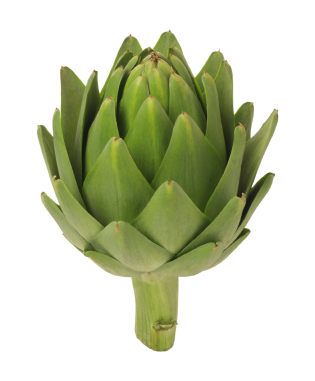

Days to germination: 7 to 20 days
Days to harvest: depends on perennial vs. annual types
Light requirements: Full sun
Water requirements: Frequent watering
Soil: Well-drained and fertile
Container: Suitable in large containers
Introduction
Artichokes are related to the thistle, and do have their share of spines. The edible part is the flower head, that looks something like a large scaled pine cone. It’s the inside heart of the head that is the main edible portion, though there is a bit of tasty flesh at the base of each scale too.
They are sometimes eaten raw, usually in salads or they can be cooked in a variety of ways. Artichokes have lots of dietary fiber, potassium, magnesium and even a good dose of protein as well.
While artichokes are actually fairly easy to grow, there is an added complication in that they can be purchased in either perennial or annual varieties. Anyone growing artichokes in warm climates (zone 7 or higher) can easily grow artichokes as perennials for a crop year-after-year. Areas with cooler weather and cold winters should find seeds for annual artichokes that will produce heads in their first year because they will not survive the winter.
Annual varieties include Green Globe and Imperial Star. To add to the confusion, the annual types can be overwintered if you live in warm climates just like the perennials. The term “annual” really refers to the heads forming in the first year, not that the plant only lives one year.
Starting from Seed
Annual plants are usually started from seed indoors, but you mostly buy starts for the perennial types. If you do start perennials from seed, follow the same planting and transplanting instructions.
Start your seed indoors, about 8 weeks before your area is expected to be frost free. Your seeds should be planted in pots larger than seedling flats, at least 4 to 5 inches across or they will outgrow their pots before transplant time. Seeds should just be under the soil by a quarter inch, no deeper.
Keep your seedlings in a very sunny location, and give them a light feeding of fertilizer every 2 weeks. Add in a bit of artificial lighting so that your plants get at least a full 10 hours of light each day.
Transplanting
They should be out in the garden about a week after your last frost. A few days before you want to transplant, put your seedlings outside during the day so they can adjust to the outdoor weather. Bring them back into the house at night.
Dig your artichoke bed deeply to loosen the soil and add a helping of aged manure or compost. Whether you grew your own seedlings or purchased them, they will go out in the garden at least 3 feet apart. The plants will grow very large so don’t be tempted to crowd them to save space.
Growing Instructions
Perennial artichokes may have the benefit of providing a harvest for many years after you start your plants, but the disadvantage is that you won’t get anything from them for the first year. On the other hand, you can harvest from annuals on the first year.
Artichokes love their nutrients, so give them a good feeding around midsummer with either a commercial fertilizer or a top dressing of compost. Water them regularly, and use a heavy layer of mulch to keep weeds down and preserve moisture.
If you are growing perennial artichokes, you will have to prepare your plants to overwinter once the season’s harvest is complete. Once your area is due to start getting frost, cut your plants down to about 12 inches in height. Pile on a a thick layer of straw or other mulch material to cover the plants by several inches. You need to cover the stem, not just the ground over the roots. Leave them covered through the winter, and then carefully rake off the mulch in the spring a few weeks before your last frost date.
Unlike asparagus, another popular garden perennial, artichokes will only produce a harvest for 3 to 4 years so you will still need to start new plants every few seasons in order to maintain a steady crop.
Containers
You’ll need a very large container, but you definitely can grow artichokes this way. In fact, for regions where the winters are just slightly too cold, you may have better luck overwintering your plants if you use the container method instead of having artichokes out in the garden.
Your pots should be at least 3 feet across for each individual plant, and 1 foot or more in depth. At the end of the season, cut back the plant as mentioned above, mulch over and move the pot to a sheltered area (like inside an unheated garage). Uncover them in the spring.
Pests and Diseases
Being related to the thistle, artichokes are extremely hardy plants that are not bothered by very many pests. Aphids can attack the leaves but are fairly easy to control with a pyrethrin-based insecticide spray.
Various mildews can effect the leaves, but you can usually keep this to a minimum if you only water your plants down at soil level and don’t soak the leaves every time you water. Also, make sure there is plenty of space between the plants to reduce the humidity build-up that mildew likes. If you start to see a light dusting of mildew, a standard fungicide spray should take care of it.
Harvest and Storage
Annual artichokes will produce around 6 heads and perennial ones will give you twice that, though they won’t do so until their second season.
After a few months of growth, your plants will produce their heads on the tips of the flower stalks. They should be harvested when they are about the size of an apple, before the scales start to open. If left too long, the heads will open up and a large purple flower will blossom.
Cut the heads off, taking a couple inches of stem along with it. The plant will continue to sprout new stalks and heads. You should wear gloves when you cut your artichokes because they are related to the thistle, after all. The scales on the heads have sharp points that are then cut off for cooking.
After you bring the heads into the house, give them a thorough wash right away. Those tight scales will always be hiding an insect or two.
Fresh artichokes have a short shelf-life, and should be stored (unwashed) in a plastic bag in your refrigerator. They will only last 4 or 5 days, so plan to use them quickly. Once you’ve cooked them, you can store artichokes longer in the freezer.
March 22nd, 2012 at 2:17 pm
I have 6 plants that I did from seed in the ground last spring. Our first head has sprouted and we have a few more little ones coming up. Is it true that we must cut off the first head in order for the plant to produce more heads? We haven’t cut it and we already have around 4 more “babies” coming up on the same plant. These are Emerald. Thanks for your assistance.
April 29th, 2012 at 4:31 am
You do not have to cut off he first artichoke. Let it grow to maturity and enjoy. More will follow
May 17th, 2012 at 8:23 pm
Here in southern Missouri, we can’t grow much but rocks in our compacted rocky/clay dirt. I am wondering if I can just dig a hole and fill it with the Earthgro brand humus & manure mix from Walmart. Everything I’ve ever tried to grow in our Missouri “dirt” has suffered terribly, even when I’ve tried to amend it heavily, so I’m sure the artichokes I bought would wither and die in this dirt. How deep & wide should I dig the hole? Do artichokes have a super-long taproot similar to a regular thistle or dandelion? In the container recommendation it says the pot should be 3 feet ACROSS and only 1 foot deep, is this correct? I keep thinking a plant this tall should have a much deeper pot (or in my case, a much deep hole in the ground). Thanks for your help 🙂
May 21st, 2012 at 5:02 pm
Wow, thanks for this great info. I have a couple of questions and hope you can help. Now in their second year, my plants have begun producing. But the heads are opening up early on—having that “bent” look toward the bottom of the leaves and continuing to grow that way. Any idea what may be causing that? And even though they still look immature (pale green, very soft thorns, etc.), the heads are threatening to open on top, which concerns me, since I realize if the thistles open, I’ve waited too long. Am I doing something wrong? Thanks in advance for any help!
June 7th, 2012 at 11:35 am
I live in Hawaii and my artichoke plants are 2 years old. They have never flowered. They take up a bunch of room. It’s hot as S*&%, where I live. Is this useless or can I force them to flower with a trick?
July 8th, 2012 at 1:59 pm
We have three artichoke plants that produced beautifully this year. We are in the high desert of Arizona. Now that it is summer, should we cut the stalks back or wait until fall? The leaves have turned yellow and are dried out, but we continue to keep the soil moist. Just want to know what our next steps should be to ensure good healthy plants for next season. Thanks!
July 27th, 2012 at 4:04 pm
We have a GIANT artichoke plant that took 2 years to produce but it grew artichokes for the whole neighborhood. It’s hot and dry now. What do I do with it? Do I water it? Should I trim it down to a small stem for next year? I’d love for it to come back next year! I live in San Diego – in an inland valley so it’s about 90 degrees during the summer days. It’s in the 60’s at night. It rarely freezes here in the winter.
September 5th, 2012 at 5:00 pm
I am from California and I am starting to grow different kinds of vegetables for my school project. I was wondering if September is still a good time to grow artichokes? If so, when would be my approximate harvesting season?
April 9th, 2013 at 12:50 pm
I am in Southern Missouri. I planted my artichokes last Spring and they grew great. We then cut them down and covered them for the fall. What should they look like after being covered?